
Beta-blockers work by preventing adrenaline and noradrenaline from binding to the beta-adrenergic receptors in the heart. This mechanism reduces heart rate and lowers blood pressure. Alcohol, on the other hand, causes vasodilation, which also decreases blood pressure. Combining the two exposes one to an additive hypotensive effect, the consequences of which vary depending on the patient’s profile and context.
Hypotension and bradycardia: the pharmacological mechanism at play

A beta-blocker like propranolol, bisoprolol, or metoprolol slows the heart rate and decreases the strength of heart muscle contractions. The body usually compensates for a drop in blood pressure by increasing the pulse, but the medication specifically blocks this adaptive response.
Alcohol worsens the situation by dilating peripheral blood vessels. When these two effects combine, blood pressure can drop significantly below the patient’s usual values. Symptoms that result (dizziness, blurred vision, weakness) can appear as early as the first drink, especially if the treatment is recent or the dosage is high.
The main risk is orthostatic syncope: a fainting spell when moving from a sitting to a standing position. This type of fall is particularly dangerous for elderly individuals, as it can lead to fractures. To delve deeper into the topic of beta-blockers and alcohol safety advice, it is essential to understand that this combination of effects goes beyond mere temporary discomfort.
Signs of intoxication masked by beta-blockers: an unknown trap
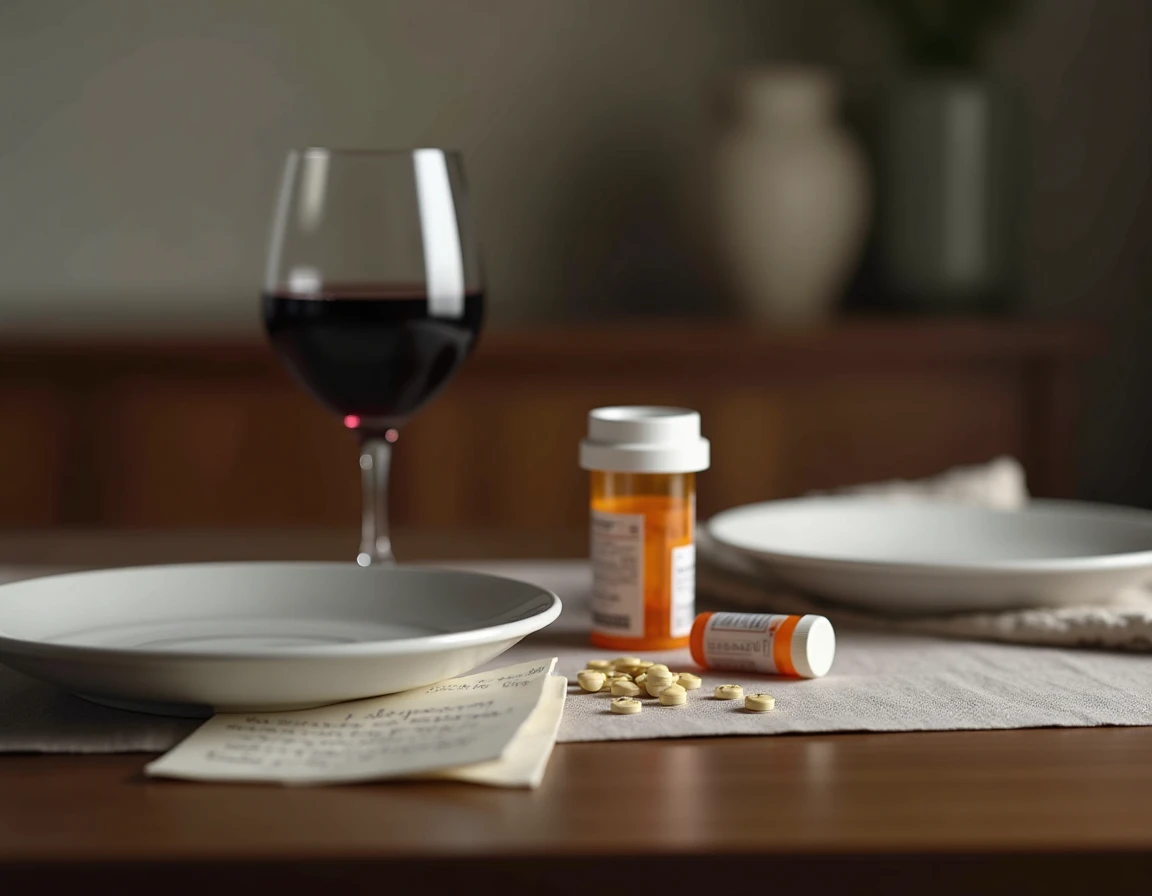
Bradycardia and hypotension caused by beta-blockers resemble certain signs of excessive alcohol consumption. A patient on beta-blocker treatment who drinks alcohol may exhibit a slowed pulse, paleness, and confusion that those around them mistakenly attribute to simple intoxication.
This confusion delays seeking help in the event of a real cardiovascular complication. A sudden drop in blood pressure or a heart rhythm disturbance goes unnoticed when everyone thinks the person has simply “had too much to drink.” Clinical pharmacology sources emphasize that this masking of symptoms represents a specific danger of the alcohol-beta-blocker combination, distinct from the risk of hypotension itself.
For those around, the practical rule is as follows: if a person on heart medication shows unusual drowsiness, a very slow pulse, or difficulty standing after consuming alcohol, the situation should be considered potentially medical rather than just a simple excess.
Heat, dehydration, and polypharmacy: aggravating factors
The interaction between beta-blockers and alcohol does not occur in a vacuum. Several factors increase the severity of adverse effects:
- Heat is a documented risk factor. Beta-blockers reduce the heart’s ability to adapt to high temperatures by limiting the acceleration of the pulse. Alcohol, through its vasodilation, amplifies the loss of body heat while promoting dehydration. The combination of beta-blockers, alcohol, and heat waves exposes individuals to discomfort and an increased risk of heat stroke.
- Dehydration, even mild (physical exertion, insufficient meals, hot days), decreases blood volume. The hypotensive effects of the medication and alcohol are then more pronounced.
- Polypharmacy multiplies interactions. A patient taking both a beta-blocker, a diuretic, and another antihypertensive sees their risk of blood pressure drops significantly increase with alcohol. Psychotropics (anxiolytics, antidepressants) add an additional sedative effect.
Elderly individuals often accumulate these factors: multiple medications, lower hydration, increased sensitivity to heat. Even moderate alcohol consumption can lead to marked blood pressure drops with dizziness, confusion, and falls.
Propranolol, bisoprolol, metoprolol: differences depending on the molecule
Not all beta-blockers behave the same way in relation to alcohol. Propranolol, non-selective and with high hepatic affinity, is metabolized by the liver, just like alcohol. Their simultaneous passage through the liver can alter the elimination speed of the medication and thus prolong or intensify its effects.
Bisoprolol, selective for beta-1 receptors and partially eliminated via the kidneys, has a less pronounced hepatic interaction profile. Metoprolol, also metabolized by the liver, is closer to propranolol in this regard. The leaflet for these medications recommends avoiding or severely limiting alcohol consumption during treatment.
Regardless of the prescribed beta-blocker, the hypotensive effect combined with alcohol remains the common risk across the entire class. The difference between molecules mainly lies in the intensity of the hepatic interaction and the duration of the medication’s action.
Practical recommendations for patients on beta-blockers
The first step is to discuss it with the prescribing doctor or pharmacist. The response will vary depending on the molecule, dosage, other ongoing treatments, and overall health status. For some patients, an occasional drink may not pose a major problem. For others, especially those on multiple medications or suffering from liver insufficiency, abstinence remains preferable.
Some concrete precautions reduce the risk:
- Do not drink alcohol in the hours following the intake of the medication when its blood concentration is at its peak
- Stand up slowly after sitting or lying down to limit the risk of orthostatic discomfort
- Stay hydrated with water before, during, and after any alcohol consumption
- Avoid alcohol during hot weather or after physical exertion
- Inform those around about the ongoing treatment so they can react in case of discomfort
Treatment with beta-blockers is prescribed for serious indications (high blood pressure, heart rhythm disorders, prevention after a heart attack). Stopping or modifying the dosage to be able to drink is a false solution that exposes one to a potentially dangerous rebound in heart rate. Any modification of treatment must go through the doctor, never through an autonomous decision related to a social occasion.