
Red hair gets its color from a particular pigment, pheomelanin, produced in much greater quantities than in brunettes or blondes. When this pigment declines with age, the transition to white does not follow the same path as for other hair colors. The process often goes through intermediate stages (venetian blonde, pale blonde, then white) rather than the classic gray.
Pheomelanin and eumelanin: what makes the graying of redheads different
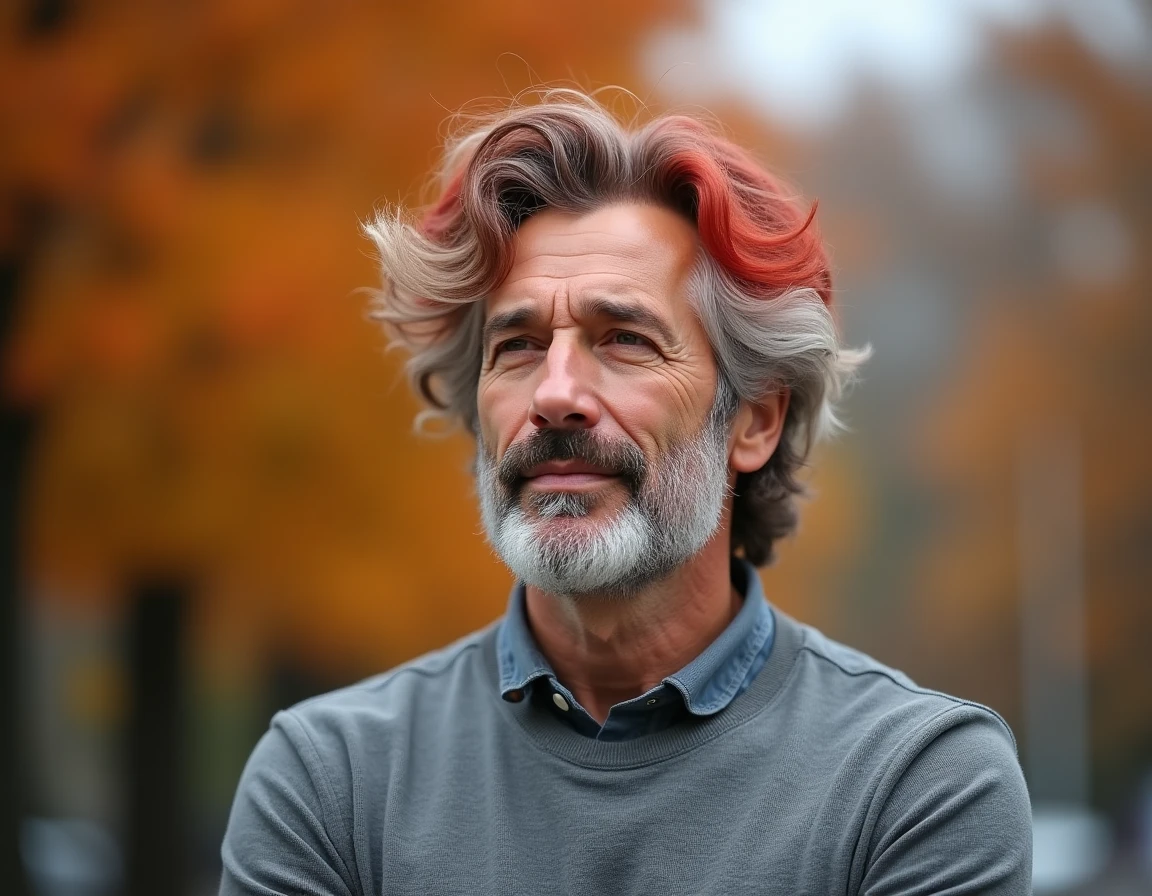
The color of hair depends on two types of melanin. Eumelanin, responsible for brown and black shades, predominates in the majority of the population. Pheomelanin gives red hair its coppery pigment, and its chemical structure clearly distinguishes it from its dark cousin.
When melanocytes, the cells that produce these pigments at the hair follicle bulb, slow down their production, the visible result differs depending on the type of melanin involved. In people with predominant eumelanin, the gradual loss of pigment creates a gradient towards gray, an optical mix between still-colored hair and hair that has become transparent.
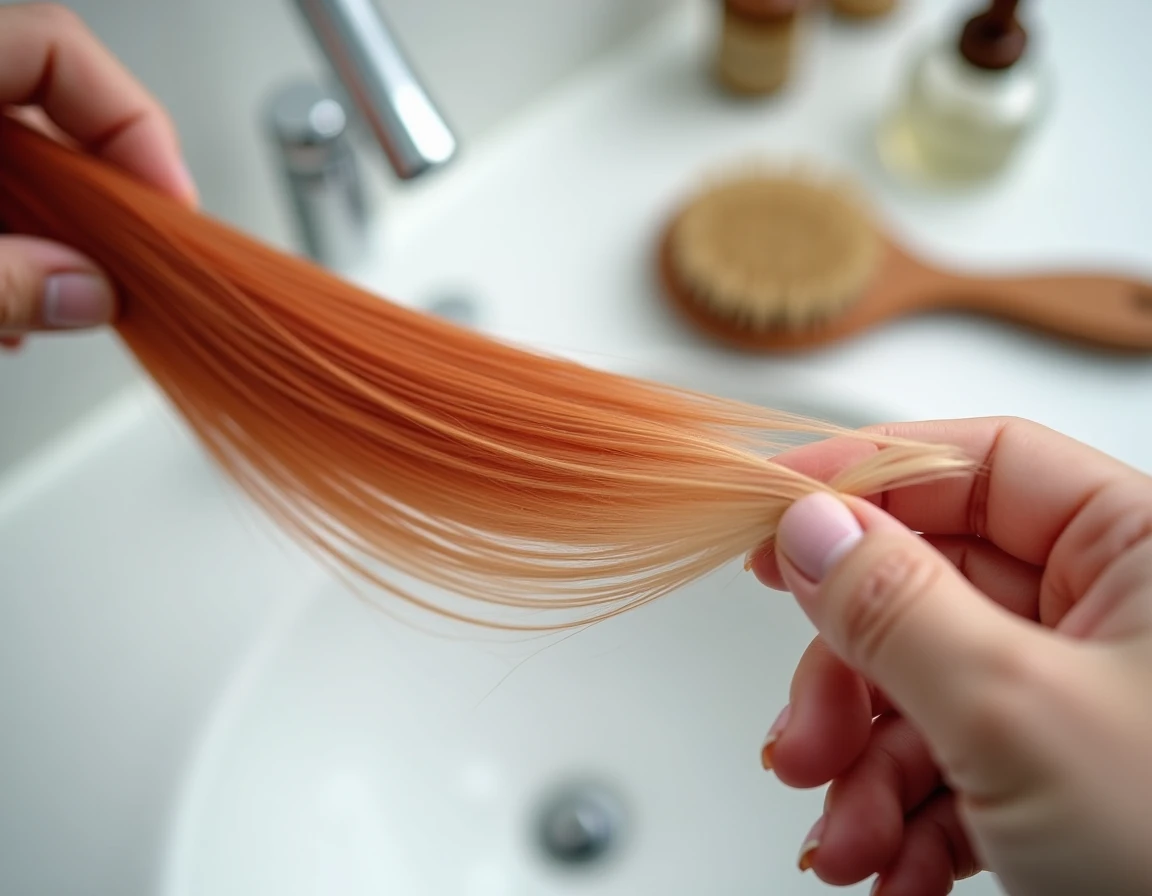
In redheads, pheomelanin dilutes differently. Testimonials collected on forums for red-haired individuals converge: the hair goes through a blonde phase, sometimes very light, before reaching white. Several people describe a transition of “red, light red, blonde, light blonde, then translucent.” This journey explains why it is sometimes mistakenly said that red hair never grays. It does gray, but the gray phase is so brief or subtle that it goes unnoticed.
The moment when red hair turns white with age varies among individuals, but the genetic component remains the dominant factor in the timing of this transition.
Stress and repigmentation: what recent research nuances
The link between stress and the appearance of white hair has garnered renewed scientific interest. Studies published after 2020 have highlighted a phenomenon that was thought impossible: partial repigmentation of certain strands after a marked reduction in stress.
This result does not mean that simply relaxing will restore one’s original color. Available data indicate that this repigmentation only concerns a few individuals and a few strands, at the very beginning of the graying process. Once the melanocyte has ceased all pigment production in a given follicle, no reversal has been observed.
For redheads, this line of research raises a specific question. Since pheomelanin is produced by a distinct genetic mechanism, it is still unknown whether the melanocytes specialized in this pigment react to stress in the same way as those producing eumelanin. No study has isolated the stress response of pheomelanin follicles in humans.
Loss of red color and impact on personal identity
Natural red hair concerns a very small part of the population. This rarity makes it a strong identity marker, often present from childhood in the way others perceive and describe the person. Losing this color with age is not just an aesthetic change.
Several dimensions come into play:
- The social gaze changes: comments about the hair, whether positive or negative, that have accompanied the person throughout their life disappear, which can create a feeling of loss of a distinctive trait
- The self-image in the mirror no longer corresponds to the mental representation the person has built of themselves, sometimes over several decades
- The transition through an intermediate blonde phase, unique to redheads, blurs the markers: one is “no longer red” without being “yet white,” complicating personal positioning in the face of aging
This hair transition can affect self-esteem more significantly than in brunettes or blondes, precisely because red color is perceived as a distinct identity and not simply as a shade among others.
Progressive coloring and dermatological support for graying red hair
In the face of graying, coloring options for redheads present technical constraints that other colors do not encounter to the same degree. Reproducing a natural red on white hair requires a precise mix of warm pigments, and the result depends heavily on the proportion of white hair present.
Progressive colorations, which deposit pigments in successive layers over time with shampoos, offer a smoother transition than permanent coloring. They allow for maintaining a coppery or venetian blonde reflection without a sudden break from the residual natural color.
On the dermatological side, a hair assessment can identify the stage of slowing down of the melanocytes and guide the choice between:
- Maintaining color through plant-based or semi-permanent coloring, suitable for sensitive skin often associated with the red phototype
- Monitoring scalp health, as redheads have skin that is naturally more reactive to chemical coloring products
- A supported acceptance strategy, with psychological support if the transition generates significant distress
The psychological dimension of this support remains underestimated. A hairdresser or dermatologist who takes the time to explain the stages of graying, to show what the hair will look like in a year or two, reduces anxiety related to the unknown. Combining hair expertise with listening to the person yields better results than a purely technical approach.
The graying of red hair remains a genetically programmed process that no product can prevent. What can change is how one navigates this stage: informed, supported, and without the urgency to hide anything.