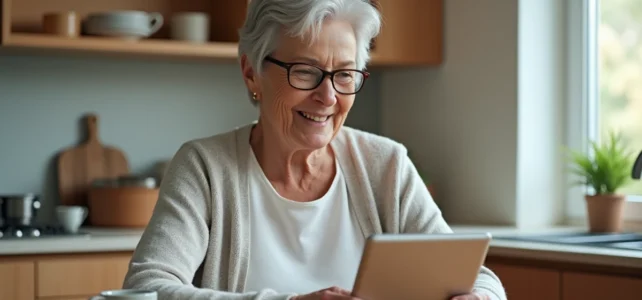
In France, nearly 90% of elderly people express the desire to stay at home for as long as possible, even as the risks of falls and isolation increase with age. The range of services aimed at facilitating home care has significantly expanded in recent years, driven by technological advancements and strong social demand.
Aging at Home: What Are the Challenges for Daily Autonomy?
Staying at home after the age of 70 is not just a whim: it is the foundation of a dignified, sometimes fragile, existence that must be preserved. Challenges are mounting. Autonomy, social connections, the role of caregivers, and quality of life intertwine, creating a daily life where every detail matters. The increase in life expectancy compels us to rethink home care solutions, as the loss of bearings looms. Adapting the living space is no longer an option: it is the key to real independence for thousands of retirees.
Living in one’s home is not just about rejecting institutional care. It is about maintaining control over one’s habits, encounters, and environment. However, the distance from loved ones and the disappearance of past solidarities make solitude heavier. To cope with this, support services and social monitoring are essential as barriers against isolation.
Autonomy is not just about escaping dependence. It is built daily, sometimes through tiny gestures: getting up, preparing a meal, going out to get the mail. Physical or cognitive issues complicate matters, so it is necessary to anticipate, recognize signs of fragility, and adapt assistance. Specialized platforms step in where the state is no longer sufficient. On the Astelos Senior website, families find practical advice and verified solutions to address each situation and ease the journey for seniors and their loved ones.
Family caregivers play a complex role: they support, organize, reassure, often at the cost of silent exhaustion. Their daily lives require support, relief, advice, and appropriate tools. The arrival of digital technology and the mobilization of local networks pave the way for more humane, yet more effective, care services that promote real autonomy at home.
What Services and Equipment Simplify Seniors’ Lives at Home?
The range of services designed for home care has never been broader. At the forefront is safety. Connected devices, alarms, fall detectors, teleassistance, smart locks are highly sought after. AgeTech is making its way into homes, reassuring families and restoring seniors’ confidence in their daily lives.
Home assistance has also evolved. Trained caregivers perform household tasks, deliver meals, accompany outings, or help with shopping. These professionals lighten the mental load, prevent loss of autonomy, and break the routine of solitude.
Here is an overview of concrete devices that are revolutionizing daily life:
- Connected objects: watches or bracelets that monitor activity, sensors to detect suspicious movements, electronic pill dispensers to avoid forgetting medications.
- Companion robots: assistants that chat, stimulate memory, and create a reassuring presence.
- Adapted physical activities: personalized sessions at home, programs for walking or gentle gymnastics, sometimes supervised by health professionals.
But equipment alone is not enough. Shared moments, participation in workshops, health prevention organized by assisted living residences or local associations, bring a new dimension. By valuing individual choices and securing each step, these services create a freer and more serene daily life, where humanity and innovation no longer oppose each other.
Practical Tips and Inspiring Innovations to Preserve Autonomy
Preserving autonomy involves concrete solutions designed for daily life. A few simple gestures, combined with the right services, can make a significant difference. Suitable equipment and technical aids facilitate everyday life: grab bars in the right places, shower seats for safe bathing, discreet ramps in hallways, stairlifts to navigate steps. An occupational therapist can recommend appropriate equipment and adjust the living space to each fragility.
- Contact the municipal social action centers (CCAS) for a tailored diagnosis conducted at home.
- Request the personalized autonomy allowance (APA) or the disability compensation benefit (PCH) to finance housing adaptations.
- Inquire at local information points: mutual insurance companies and pension funds often offer additional assistance, sometimes unknown.
The various financial aids are also within reach: ASH to reduce accommodation costs, ASPA to guarantee a minimum income. Administrative procedures may seem complex, but well-managed support simplifies everything. A relative or a professional can assist in compiling the application and ensure that rights are not overlooked.
Innovation is infiltrating everywhere: presence sensors to detect unusual absences, remote control of lighting, applications that coordinate home care or stimulate memory. Home care services no longer just provide a material response: they focus on social support, prevention, trust, and dialogue to preserve quality of life. Staying at home is now a full-fledged adventure, and every well-thought-out solution writes a new chapter.