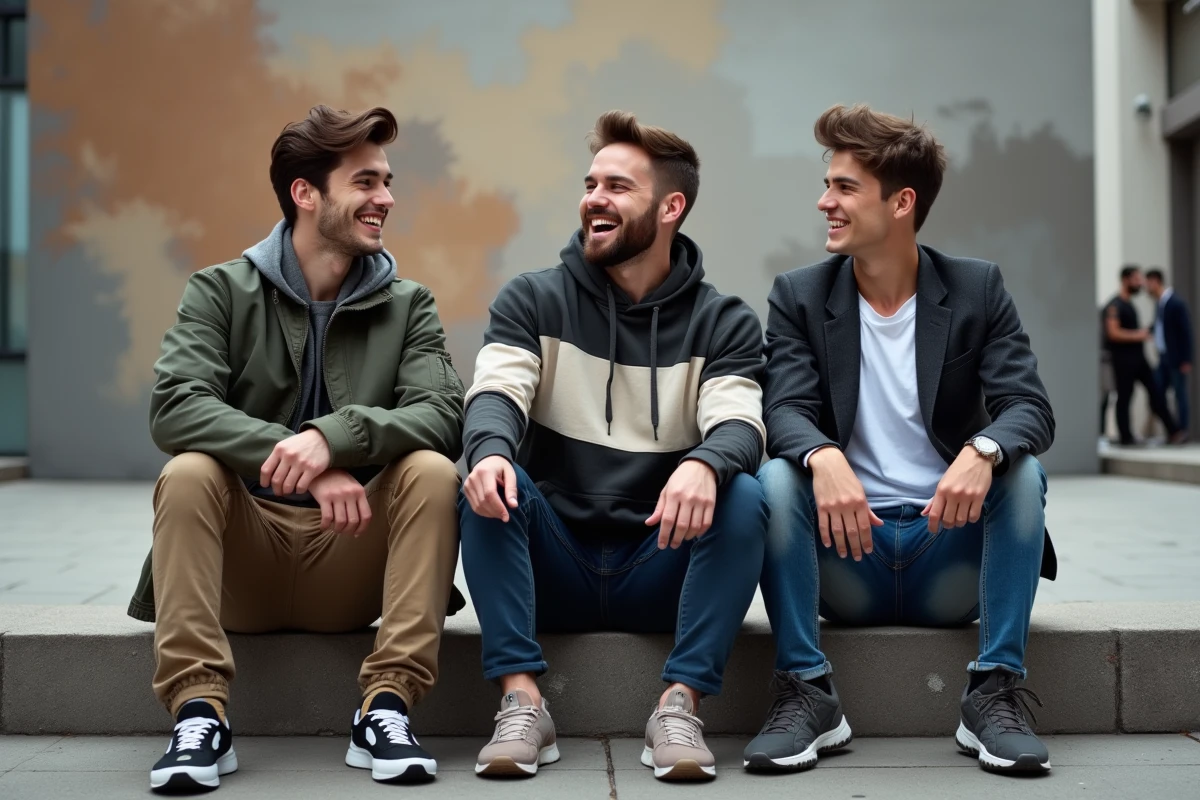
In a high school courtyard, you can spot in a few seconds the group wearing Nike TN, the one sporting oversized hoodies, and the one opting for vintage thrifted clothing. These choices are not trivial. They function as an instant visual language, a signal sent to others even before opening one’s mouth.
Recommendation Algorithms and the Standardization of Fashion Styles
When a teenager opens TikTok or Instagram, the feed they see is not the same as their parents’. Recommendation algorithms push the same micro-fashion trends simultaneously to millions of young users. The time between the emergence of a style and its mass adoption shrinks to a few weeks, sometimes just a few days.
This mechanism largely explains the impression that “everyone dresses the same.” A specific pant cut, a precise color, or an accessory spotted in a viral video appears in school lockers even before it hits the stores. Algorithms accelerate the homogenization of trends far more effectively than any print magazine ever did.
Understanding why fashion and youth today form such a close duo requires looking at these feedback loops. The more engagement a style generates, the more the platform showcases it, and the more it gets adopted. Teenagers are not always aware of this mechanism and perceive a trend as “natural” when it is amplified by a system designed to maximize screen time.
Social Commerce: Buying Clothing Without Leaving Your Social Network
The shopping journey has radically changed. For a large part of the 15-24 age group, Instagram, TikTok, and Snapchat have become the first point of contact with a brand, before the website or physical store. You discover a product in a story, click, and order. All in under two minutes.
This phenomenon has a name: social commerce. It blurs the line between content and advertising. A content creator wears a sweatshirt in a humorous video, slips in an affiliate link, and hundreds of orders follow suit. The act of purchasing no longer resembles a thoughtful process; it integrates into the flow of entertainment.
For brands, this mechanism is remarkably effective. They no longer need to convince a teenager to visit a store. The product comes to them, on their phone, at the moment they are most receptive. Returns vary regarding the actual satisfaction of these impulsive purchases, but the volume remains strong.
What Social Commerce Changes in Consumption Habits
- Physical try-ons disappear from the shopping journey for many teenagers, increasing the return rate and associated textile waste
- Brand loyalty erodes in favor of loyalty to a content creator, who can change partnerships from one week to the next
- The clothing budget of young people fragments into frequent and inexpensive purchases, typical of fast fashion, rather than a few durable pieces
Clothing as a Social Marker in the Playground
Before social media, the pressure to dress well already existed. A teenager not wearing the right brand of sneakers risked exclusion from the group. This mechanism of social belonging has not changed in principle. What has changed is its intensity and speed.
Today, clothing functions as a code for access to the group. Wearing the right hoodie or the right crossbody bag immediately signals which circle you belong to. It’s not a matter of vanity: teenagers go through a period where the need for integration is a powerful driver.
Parents find themselves on the front lines of these demands. Their own relationship with brands, often shaped during their own adolescence, influences how they respond. Some give in because they remember experiencing the same thing. Others resist, sometimes without realizing the social stakes that a logo represents for their child.

Second Hand and Ecological Awareness Among 15-29 Year Olds
It would be a mistake to reduce the relationship between young people and fashion to fast fashion. A deeper trend is emerging: second-hand shopping is significantly increasing among young consumers. Recent surveys conducted by ADEME and Kantar for the Women’s Ready-to-Wear Federation confirm this shift.
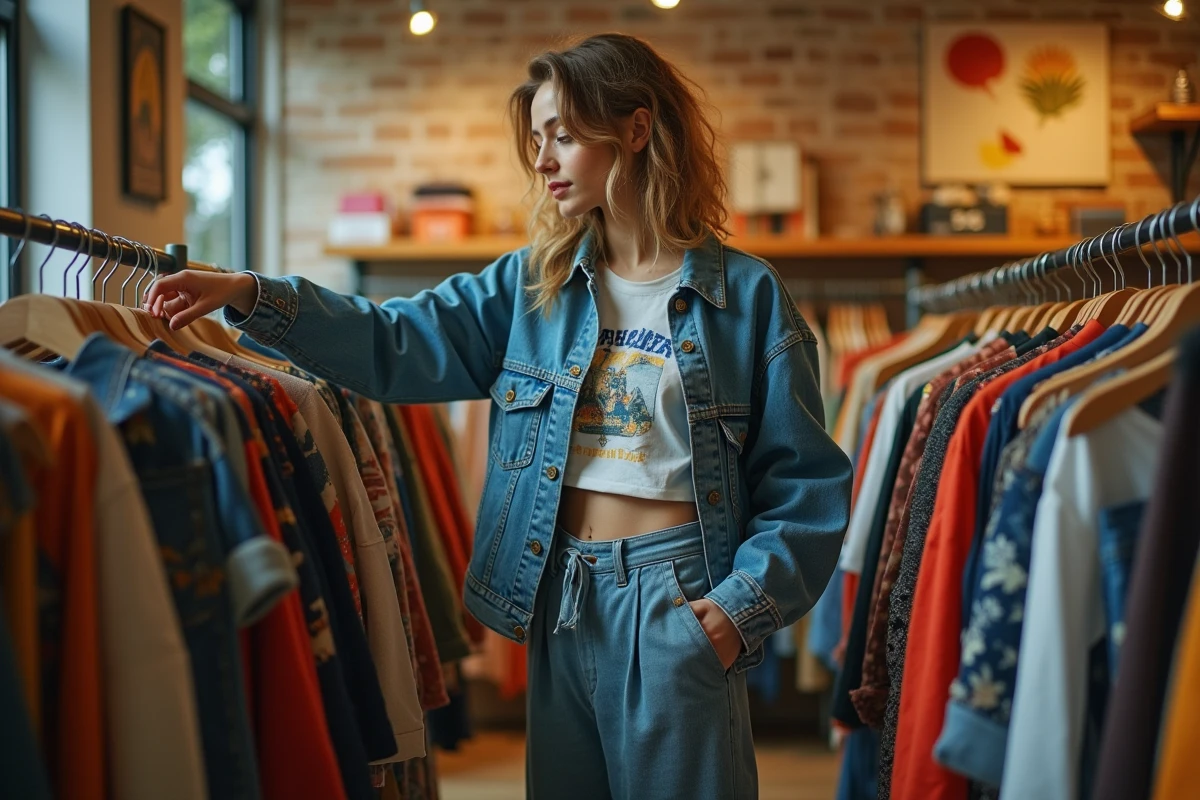
Physical thrift stores, online resale platforms, swapping among friends: practices are diversifying. For some teenagers, buying second-hand is no longer a default choice; it’s a statement. Wearing vintage clothing becomes an act of distinction, a way to stand out from the uniform flow generated by algorithms.
Barriers That Persist Despite the Enthusiasm
The ecological discourse does not always suffice to counterbalance social pressure. When a specific model of sneakers goes viral on TikTok, finding its equivalent second-hand in the right size becomes a daunting task. Environmental consciousness coexists with group pressure, and this tension is not easily resolved.
It is also noted that clothing rental is starting to reach this age group, especially for occasional events. The model remains marginal, but it illustrates an evolving relationship with ownership. Owning a piece of clothing matters less than having worn it at the right moment, in front of the right people, with the right photo posted online.
Fashion among teenagers is neither merely frivolous nor blind conformity. It intertwines algorithmic mechanisms, a deep need for social belonging, and a developing ecological sensitivity. These three forces pull in different directions, and it is precisely this tension that makes the subject so difficult to navigate for parents, educators, and the brands themselves.