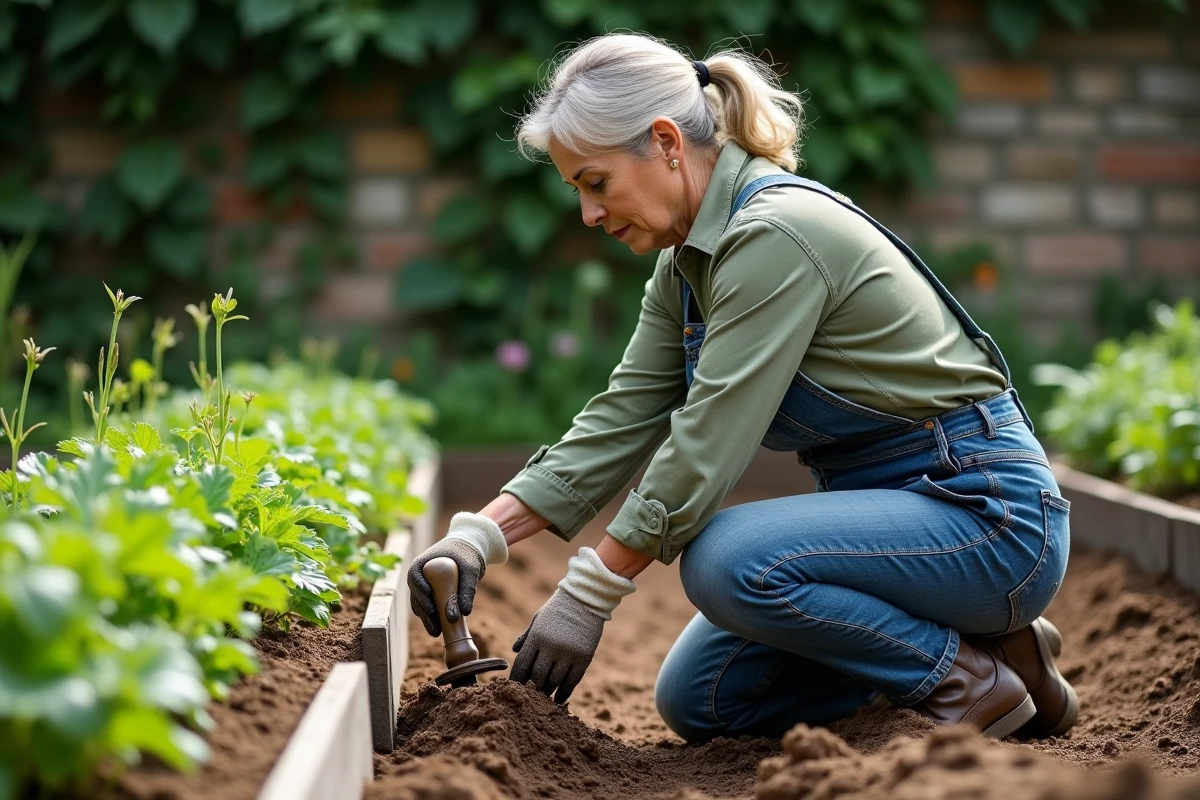
You hoe between your rows of carrots, then you mound the soil around the base of your potato plants. Two actions, two objectives, but they are often confused. Hoeing breaks the surface crust of the soil, while hilling brings soil up to the base of a plant. Understanding this distinction changes the way you maintain your vegetable garden, and especially when you intervene.
Impact on soil life: what hoeing and hilling really change
When you hoe, the blade of the hoe slices through the top two or three centimeters of soil. This action cuts off the capillary rise of water to the surface, where it evaporates. The result: hoeing reduces evaporation and retains moisture deeper in the soil. This is the origin of the old saying “a hoeing is worth two waterings.”
Hilling, on the other hand, moves a much larger volume of soil. You create a mound around the base, which alters the local soil structure: increased aeration, better drainage, but also greater exposure to drying out in the summer.
Recent field reports show that repeated soil work increases the oxidation of organic matter. Hoeing too often, too deeply, or hilling on already dry soil weakens the underground fungal network (the fungal filaments that help roots absorb nutrients). If you garden on light, sandy soil, caution is advised: each tool pass disrupts the continuity of this network.
Before choosing between these two techniques, it is useful to understand how to hoe and hill your vegetable garden according to the type of crop and the nature of your soil.
Hoeing in the vegetable garden: when and how to use it effectively
Hoeing serves three functions in a single pass: weeding, aerating the surface, and limiting watering. Have you ever noticed that gray, hard crust that forms after rain followed by sunshine? That’s what the hoe needs to break.
The right time to hoe
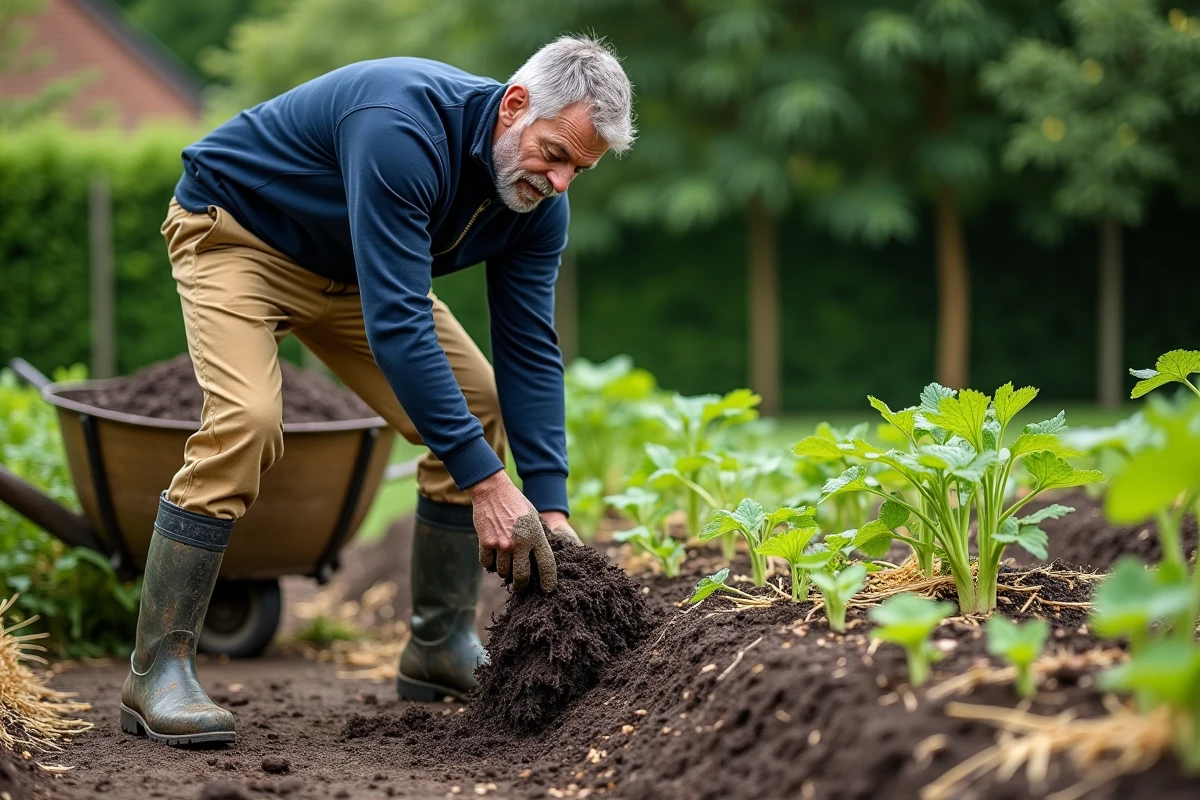
Hoe after a rain, when the soil starts to dry on the surface but remains soft underneath. Working soil that is too dry crumbles it into dust. Working overly wet soil compacts it further.
Limit hoeing to a depth of two to three centimeters. Beyond that, you risk cutting the shallow roots of your vegetables and disturbing soil organisms.
Tools suitable for hoeing
- The classic hoe is suitable for paths and spaced rows. Its wide blade pushes weeds out of the soil in one motion.
- The hoe-hoe combines a flat blade and a pointed tongue. It allows you to hoe and create furrows in narrow spaces.
- The oscillating weeder (or pendulum hoe) works by pushing and pulling, which reduces physical effort over large areas.
From an ergonomic standpoint, choose a handle at elbow height to avoid bending your back. Musculoskeletal disorders related to hoeing are common among regular gardeners, and a poorly sized tool exacerbates the problem.
Hilling vegetables: which plants to hill and why
Hilling involves bringing soil to the base of a plant to form a mound. The action meets very different needs depending on the crops.
Potatoes: the most common case
Tubers form above the mother potato. Without hilling, they are exposed to light and turn green. This greening produces solanine, a toxic substance. Hilling potatoes protects the tubers from light and increases the tuberization area.
Hill when the stems reach about twenty centimeters. A second pass a few weeks later is often useful if growth is vigorous.
Other vegetables that benefit from hilling
- Beans and peas: the mound stabilizes the stem and encourages rooting.
- Leeks: gradual hilling whitens the stalk, the edible part.
- Celery roots and fennels: a slight mound protects the collar from frost at the end of the season.
Be cautious with modern varieties of potatoes or corn that do not tolerate late or excessive hilling well. An excessive mound can suffocate shallow roots or cause excess moisture at the collar.
Covered soil or worked soil: adapting your strategy to the climate
More frequent droughts change the game. On bare soil in the middle of summer, hoeing or hilling exposes the soil to the sun and accelerates water loss. Many gardeners now combine these techniques with permanent mulching: hoeing in early spring to break the crust, then covering with mulch (straw, shredded material, dried grass clippings) for the rest of the season.
Hoeing and hilling then become occasional actions, not weekly routines. This approach limits the degradation of organic matter while retaining the benefits of mechanical work when it is truly necessary.
For hilling potatoes, an alternative is to apply a thick layer of mulch around the plants instead of bringing up soil. Straw blocks light just as effectively and keeps the soil cool underneath. The trade-off: watch for slugs, which appreciate this type of shelter.
Choosing between hoeing and hilling depends on the crop, the growth stage, and your type of soil. Hoeing primarily serves to weed and conserve water, while hilling protects and develops the useful part of the vegetable. Rather than opposing these two actions, integrate them into a reasoned rotation with mulching, intervening as little as possible on soil that is already functioning well.