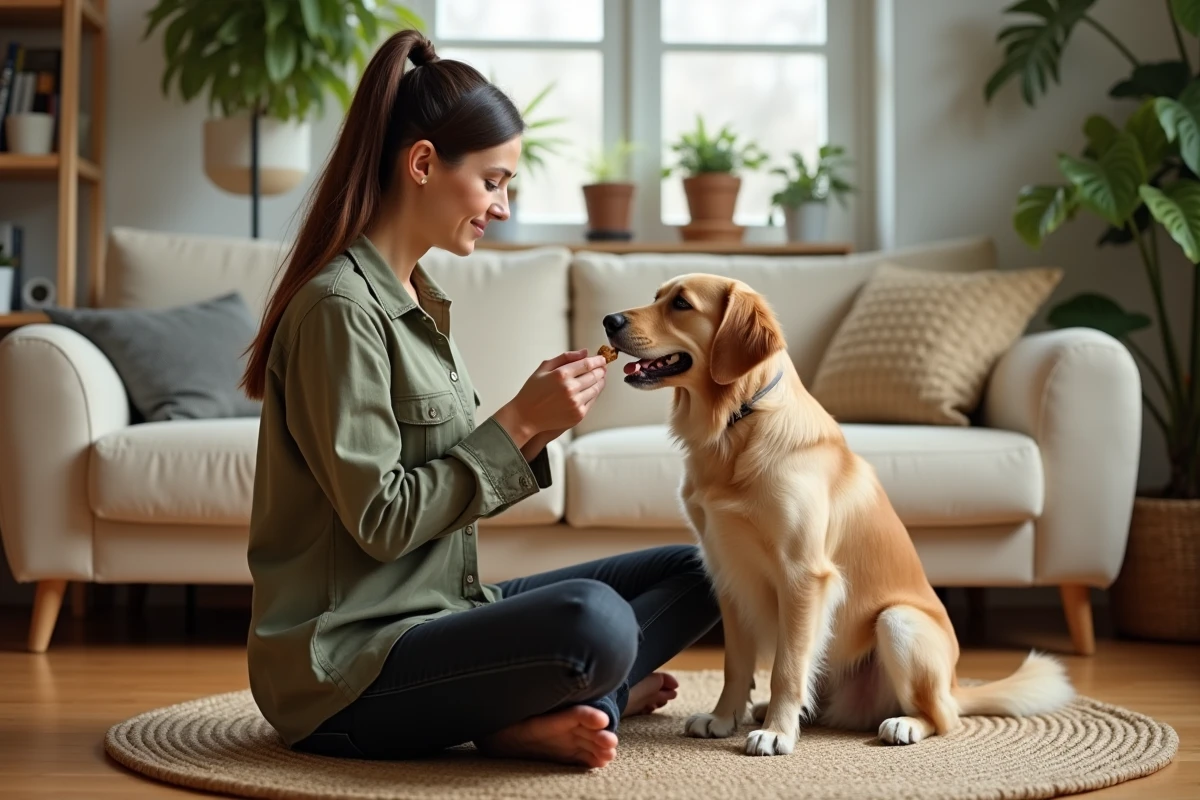
The well-being of a pet is often measured by its obedience. A dog that comes when called, a cat that doesn’t scratch the couch: these are the usual criteria for successful training. Recent professional recommendations, particularly those from the WSAVA, broaden this view by incorporating mental state, observed behavior, and the quality of the environment as indicators of animal welfare.
Separation anxiety in dogs and cats: signals and gradual learning methods
The majority of owners discover separation anxiety when the damage is already visible: prolonged barking, destruction, inappropriate elimination. In cats, the signals are often more subtle (excessive licking, refusal to eat in the owner’s absence).
Preparing the animal for absence requires gradual learning, not a sudden withdrawal. The principle is based on short, repeated, neutral departures, without farewell rituals or excessive reunions. The animal learns that departure does not signal anything threatening.
- Start with absences of a few minutes, with the door closed, then gradually increase the duration over several weeks without skipping steps.
- Associate the moment of departure with a positive stimulus (a food-dispensing toy, for example) so that the animal anticipates it without stress.
- Avoid any punishment upon return, even in the face of destruction: punishment after the fact only reinforces anxiety during the next departure.
To delve deeper into these techniques and access resources on animal behavior, you can visit www.attitudecanine.fr for animals tailored to each dog or cat profile.
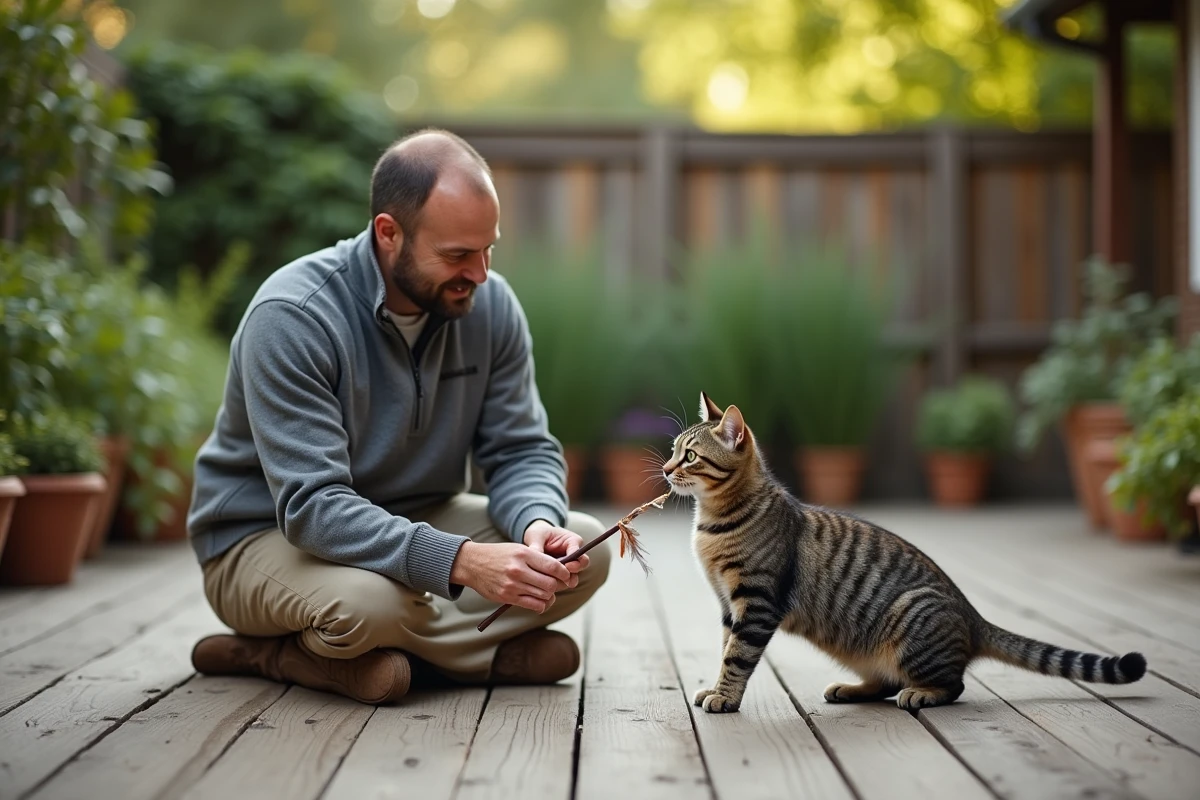
Household consistency and non-coercive methods: two compared pillars
Recent sources in animal behavior distinguish two complementary axes for education: the consistency of rules within the household and the use of non-coercive methods. These two axes do not produce the same effects depending on the situations.
| Criterion | Household Consistency | Non-Coercive Methods |
|---|---|---|
| Principle | All household members apply the same rules, the same words, the same limits | Positive reinforcement, absence of physical punishment or coercion |
| Impact on Anxiety | Reduces confusion and unpredictability, direct factors of stress | Avoids fear associated with punishment, preserves the trust relationship |
| Difficulty for the Owner | Coordination among adults, children, regular visitors | Patience and consistency, personal training in reinforcement techniques |
| Common Mistake | One household member tolerates what another prohibits | Confusing absence of punishment with absence of structure |
| Effect on Changes in Routine | The animal adapts better if the markers remain stable despite a move or change in schedule | Positive reinforcement allows for rebuilding routines without conflict |
Household consistency affects the emotional stability of the animal on a daily basis. In contrast, non-coercive methods have a greater impact on the quality of the relationship between the animal and each household member. One without the other produces fragile results: a consistent but punitive household generates obedience through fear, while a caring but inconsistent household creates confusion.
Education in the face of stress: going beyond simple obedience for animal welfare
An animal that executes a perfect “sit” may still suffer from chronic stress. Obedience does not inform about the animal’s mental state. WSAVA recommendations emphasize observing spontaneous behavior: resting postures, voluntary interactions with the environment, the ability to explore without signs of excessive vigilance.
In the face of a change in routine (new schedule, arrival of a baby, renovations in the house), the animal does not have the words to express its discomfort. Signals to watch for in dogs include panting without physical exertion, repeated yawning, and averting gaze. In cats, prolonged withdrawal, decreased play, and unusual meowing deserve attention.
Adapting the environment rather than multiplying commands
Instead of adding commands, modifying the environment reduces stress at the source. For a cat, this means ensuring high places, accessible hiding spots, and a litter box away from noise. For a dog, a resting space not crossed by household traffic makes a measurable difference in sleep quality.
Mental stimulation activities (scent detection games for dogs, exploration courses for cats) meet the need to express species-specific behaviors. An animal that can express its natural behaviors shows fewer signs of stress, even during periods of change.
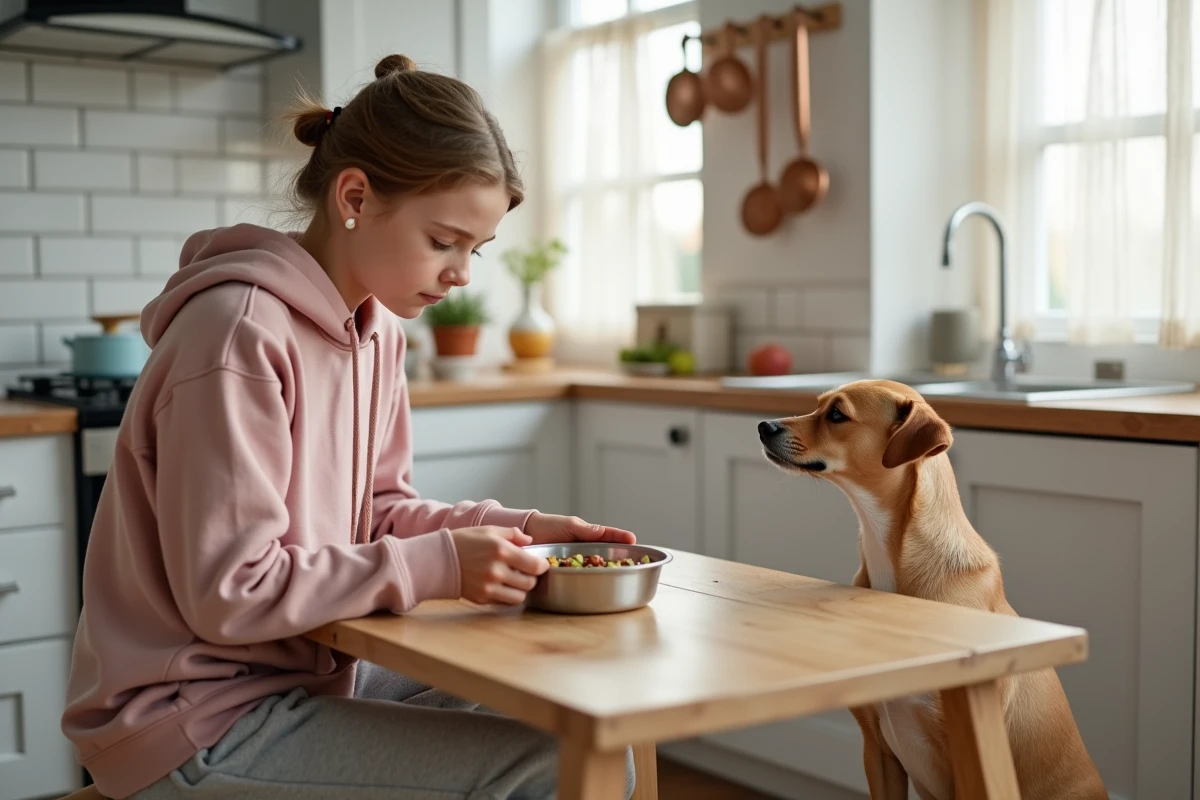
Veterinary care and health: integrating visits without generating fear
Veterinary consultations represent a source of stress for the majority of dogs and cats. This fear, if not addressed, complicates long-term care and may lead some owners to space out visits to the detriment of the animal’s health.
Getting the animal used to handling from a young age is a worthwhile investment. Regularly touching the paws, ears, and opening the mouth without medical stakes helps normalize the actions that the veterinarian will replicate during consultations. Associating these manipulations with a reward transforms a potentially aversive moment into a neutral or even positive experience.
For transport in a crate, the same principle of gradual learning applies: leave the crate open in the living space, place treats inside, then gradually close the door for short periods. A cat that voluntarily enters its transport crate arrives at the veterinarian in a very different state than one that has been forced inside.
The education of a pet should be viewed as a set of conditions that allow the animal to calmly experience everyday situations, including absences. Well-being is reflected in spontaneous behaviors, not just in response to commands. A consistent household, respectful methods, and an adapted environment form a stronger foundation than any accumulation of commands.