
The world no longer agrees on the tempo: while some countries accelerate, others slow down or stagnate, and diplomatic maneuvering tightens at every turn. Negotiations over Iran’s nuclear program remain stalled despite repeated diplomatic pressures. Global economic growth is experiencing an unprecedented slowdown, while trade tensions intensify between major powers. At the same time, several governments are tightening their control measures over information, disrupting regional balances. Targeted economic sanctions are altering the balance of power. New strategic partnerships are forming, challenging traditional alliances. The rapid evolution of these dynamics demands a careful and updated reading of international issues.
What is shaking the planet: an overview of significant international news
The atmosphere has never been so charged on the international stage. In the face of a Middle East that is igniting, tensions are rising between Iran and the United States. After the destruction of an American plane in the Strait of Hormuz, dialogue gives way to invective. Donald Trump proclaims the unwavering support of the U.S. military for its allies, while military presence intensifies around Hormuz. No one can ignore what is at stake: an escalation could drive up oil prices and disrupt balances from Brussels to Berlin and Paris.
To the East, Ukraine is sinking into a seemingly endless conflict. Russian advances continue, Moscow maintains pressure while Kiev stands firm thanks to the cautious support of its European partners. Each capital, Paris, Berlin, Brussels, weighs every word, oscillating between the desire to act and the fear of escalation. A united front is forming against Russia, even if disagreements over the severity of sanctions persist.
This tense climate, where every incident, such as a plane crash in Iran or a missile fired near the strait, raises tensions, reflects a world that constantly reshapes its alliances. The drivers of these crises intertwine: access to resources, power struggles, military rivalries. To grasp the magnitude of the stakes and understand the fabric of this evolving news, the uncompromising perspective of Journal Global proves essential.
What geopolitical dynamics explain the current tensions?
Fractures are widening day by day, with each crisis triggering another. In the Middle East, a series of clashes captures attention: an American fighter jet shot down, the Strait of Hormuz taken hostage, and an increase in belligerent statements between Iran and the Trump administration. Displays of strength, verbal sparring, and military responses keep the region on edge.
It is impossible to underestimate the geopolitical ambitions at play around the Strait of Hormuz: there, control of oil flow poses a direct threat to the rest of the globe. France and Europe are maneuvering on a tightrope, balancing diplomacy and national interest. Images of a plane crash in Iran or the loss of an American pilot loom large, raising the risk of a major confrontation.
In Eastern Europe, a different logic prevails
While the Near East raises concerns, Eastern Europe is also experiencing tremors. In Ukraine, the war stagnates, with Russia continuing to test the nerves and cohesion of the continent. In Paris, Berlin, and Kiev, responses are continuously adjusted between sanctions and military aid. Caution and a desire to avoid a slip dictate every public statement.
Layered, these crises create a shifting configuration where each actor tries to maintain control, increase influence, or simply avoid being sidelined.
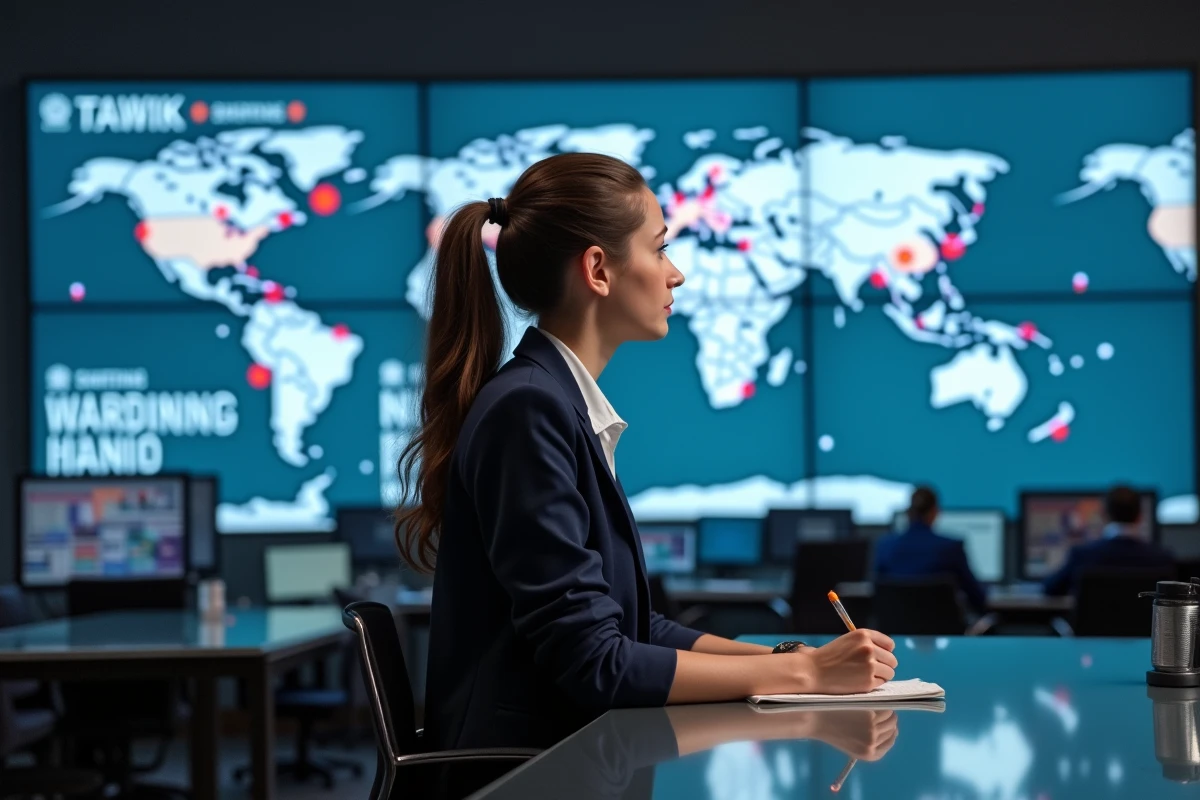
Analysis, insights, and resources for further exploration of major global issues
Reading international news is no longer limited to following chronology: it requires connecting each flash of information, decoding strategies and images, understanding how military mobilization or capital movements influence the global chessboard. International issues intersect from the Middle East to the heart of Europe, from the American continent to Ukraine.
To better grasp the complexity of these major global events, several angles deserve attention:
- The positioning of heads of state, between the calculations of Vladimir Putin and the strategy of Emmanuel Macron.
- The importance of a constant flow of images, such as war videos from Ukraine or the Middle East, which shape public opinion.
- The battle over raw materials, particularly oil, which remains a key nerve of diplomatic confrontations.
France and its European partners move forward without certainty, sharing their focus between mediation and protecting their interests. In Paris, Kiev, or Ottawa, strategies are built on careful observation of the ground, analysis, and anticipation. Everything is always in motion. The choices made now shape the future of the game.
As decisions made in Washington or Tehran trigger chain reactions thousands of kilometers away, it is essential to remain clear-eyed about these recompositions. It is impossible to predict the final scenario, but one truth remains: those who truly read international news will never look at the world map the same way again.