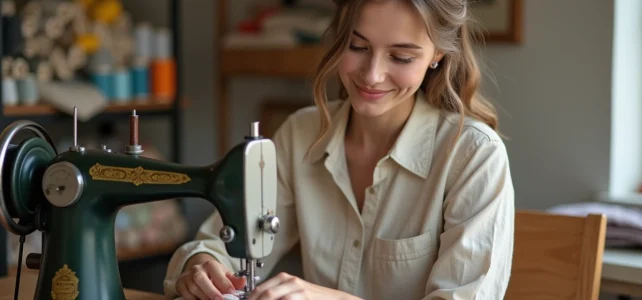
Most great fashion designers have never undergone strict academic training. Yet, the demand for precision in fabric assembly and the consistency of embroidery stitches leaves no room for approximation. Learning to handle a needle often reveals a surprising gap between simple theory and laborious practice.
Errors punctuate the learning process, but they become the essential markers for progress. Choosing the thread, understanding tension, adjusting the cut: real experience is built outside of standardized models. The first attempts, often imperfect, lay the groundwork for lasting mastery.
Why sewing and embroidery are increasingly appealing to amateur creators
What are we really looking for when we pierce the fabric with a needle and trace shapes? Sewing and embroidery have moved from the realm of niche hobbies to captivate a generation eager for originality. The era when every garment came out of a mold is coming to an end: today, personalizing, transforming, inventing is in the hands of thousands of enthusiasts. And beginner embroidery has never been more accessible: it requires neither expensive materials nor prior experience, just the desire to start, at any age, without prejudice.
Why this enthusiasm? Several obvious reasons. First, it takes very little: a hoop, needles, colored thread, a piece of fabric. Embroidery kits further simplify the process: everything is ready, from the pattern to the last strand of thread. The internet accelerates learning: YouTube conveys gestures in video, while Instagram and Facebook are teeming with groups of enthusiasts ready to share advice or experiences. Hand embroidery encourages boldness: mixing patterns, textures, colors. Machine embroidery, on the other hand, attracts those who aim for speed or wish to reproduce a design on multiple pieces.
Creating your own clothing is also a way to reconnect with almost forgotten skills. Embroidering a name on a shirt, embellishing jeans, imagining a unique piece: these desires are multiplying. Ideas abound: specialized books, “Learning Contemporary Embroidery” by Hélène Le Berre, “The Great Book of Embroidery”, or “Drawn Embroideries” by Marion Romain, are full of accessible exercises. Websites like https://www.madame-dentelle.fr/ also offer an endless playground. Little by little, sewing and embroidery are establishing themselves as a personal workshop, where every progress counts and where everyone builds their own creative path.
Stress-free first steps: materials, basics, and tips to dare to start
Before starting, it’s best to rely on a few essentials. Choosing materials may seem tedious, but a few guidelines are enough to navigate:
- A embroidery hoop to stretch the fabric and ensure even stitches
- Quality embroidery threads, like those from DMC, and suitable embroidery needles, with Bohin being a reliable choice
- Two pairs of scissors: one reserved for fabric, the other for paper, to maintain a sharp edge
- A Frixion pen or carbon paper for easily transferring patterns onto fabric: name, floral or geometric design, anything is possible
- A bit of solufix when working with dark or delicate fabrics
For the first attempts, nothing beats a cotton or linen embroidery canvas. These fabrics welcome mistakes and encourage perseverance. On the technique side, a few stitches are enough to vary creations: running stitch, backstitch, stem stitch, satin stitch, French knot. There’s no need to aim for denim embroidery right from the start; it’s better to practice on softer fabrics that forgive hesitations.
For sewing, even a simple sewing machine allows for initiation. A few projects like a pouch, a cushion, or a zippered bag help understand assembly, seam allowances, and marking. Preparing a sewing pattern, transferring it onto the fabric, pinning, cutting: all these actions quickly become familiar. A discreet but essential iron will flatten seams and hems, giving the work a neat finish. Finally, organizing tools in a sewing box prevents clutter and makes each new session more enjoyable.
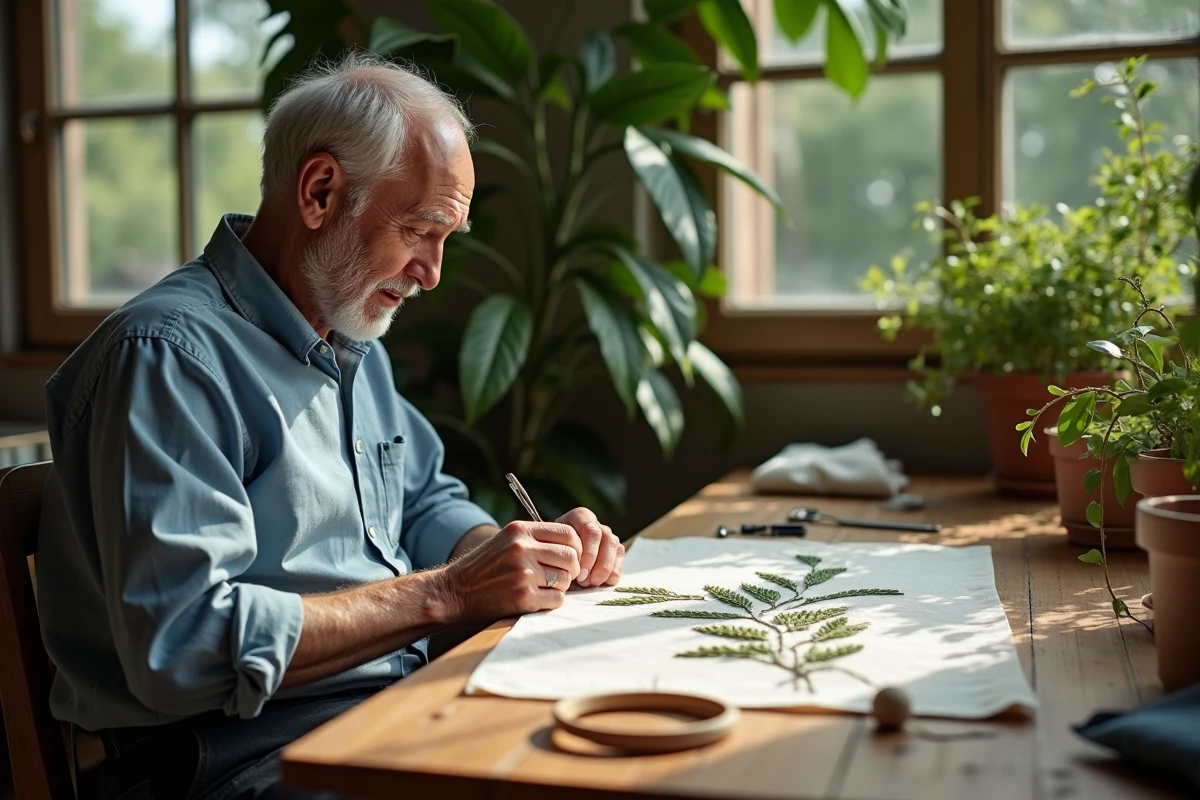
Simple ideas to imagine and create your first elegant garments at home
There’s no need to aim for an evening gown right away: it’s better to start with accessible sewing projects. The first steps often involve a toiletry bag, a fabric basket, or a zippered pouch. These items, far from being trivial, allow you to master cutting, assembly, and precision of movement. Gradually, confidence builds, paving the way for simple garments like an elasticated skirt or a straight top.
Initially, favor easy-to-work-with materials: cotton, linen, poplin. These fabrics facilitate cutting and reduce unpleasant surprises. Drawing inspiration from proven models, such as an elastic waist skirt, kimono, or dartless top, allows you to focus on the essentials: progress and enjoyment. Few pieces to assemble, a clear structure, and an assembly that holds no traps: that’s the key to a successful start.
Creating unique patterns on your garments then becomes a game, thanks to hand embroidery. Name, stylized flower, graphic pattern: each stitch tells a story on the fabric. Sometimes, embroidery even reshapes the silhouette: a highlighted shoulder, an animated sleeve, a hem enhanced with a subtle detail. For those who enjoy practical projects, the fabric basket tutorial remains a favorite: it combines cutting, straight sewing, and lining, while opening the door to autonomy.
Here are two tips to keep in mind when choosing your starting project:
- The elasticated skirt remains an excellent exercise: quick to sew, rewarding for beginners
- Satin, being very slippery, will wait until your skills are more assured before being tamed
Soon, the idea of wearing a garment crafted by your own hands will become a habit. The thread, the fabric, and patience will do the rest, and one day, the unique piece will take its place in daily life, a discreet witness to a passion turned skill.